The Gayatri Mantra, a sacred chant revered throughout Hinduism, resonates with immense power and spiritual significance. However, a common question arises, particularly for women – can the Gayatri Mantra be chanted during menstruation?
To answer this effectively, let’s delve into the wisdom of the ancient Hindu scriptures, the Shastras.
त्रैलोक्यमोहिनीं देवीं गायत्रीं च जगन्मयीम्। स्तूयामि सर्वसिद्ध्यर्थं सर्वपापविमोक्षणे।।
I meditate upon the Gayatri, who enchants the three worlds and is the embodiment of the universe. May I attain all accomplishments and liberation from all sins by her grace.
The Gayatri Mantra is an invocation to Gayatri Devi, the embodiment of the sacred “Om” and the radiant solar power. She symbolizes knowledge, illumination, and the divine light that awakens our inner wisdom. Visualize her brilliance as the life-giving force of the sun, nurturing our intellect and spiritual growth.
Drashta of the Mantra
The Gayatri Mantra finds its origin in the Rig Veda, the oldest Hindu scripture. The authorship of the mantra is attributed to Sage Vishwamitra, a revered seer with immense spiritual power. The “drashta” (seer) of the mantra, the one who received its divine knowledge, is believed to be Surya, the Sun God himself.
Unmatched Power of the Gayatri Mantra
गायत्र्युपासनादेव सर्वपापैः प्रमुच्यते। ज्ञानं च विन्दते नरः सर्वान् कामान् च लब्धवान्।।
Through the worship of Gayatri, one is liberated from all sins.
The person attains knowledge and fulfills all desires.
The Gayatri Mantra is revered for its transformative power. Chanting this mantra regularly is believed to: • Enhance intellectual capacity and sharpen the mind, leading to a deeper understanding of the world and ourselves. • Cultivate spiritual growth and awaken the inner wisdom that resides within each of us. • Purify the body, mind, and soul, promoting a sense of peace and well-being. • Invoke divine blessings and positive energy, attracting positive forces into your life. • Promote peace, harmony, and a sense of balance within yourself and the world around you.
Menstruation and Mantra Recitation
Now, let’s address the central question – can one chant the Gayatri Mantra during menstruation? Here, we encounter a nuanced perspective within the vast body of Hindu traditions.
1. Advanced Sadhakas For highly realized individuals, those who have attained an elevated state of spiritual practice (sadhana), menstruation doesn’t create an impediment to their spiritual practices, including the recitation of mantras. These advanced practitioners often possess the discipline and awareness to maintain their practice irrespective of external circumstances. Their focus lies solely on connecting with the divine and deepening their spiritual connection.
2. Common Practitioners For individuals at a more preliminary stage of their spiritual journey, it’s generally advised to refrain from mantra recitation within temples or sacred spaces during menstruation. This recommendation stems from the belief that menstrual blood embodies the potent creative energy of the divine mother, Shakti. Therefore, during menstruation, it’s considered appropriate to maintain a distinction between this potent energy and the sacred rituals performed in temples.
3. Mantra Diksha If an individual has received “mantra diksha” (initiation) from a guru, they may be permitted to continue their mantra recitation, even during menstruation, with their guru’s specific guidance. Mantra diksha establishes a special spiritual bond between the disciple and the guru. This bond can empower the disciple to continue specific practices under the guru’s guidance, even during times of physiological change.
4. Without Mantra Diksha For individuals who haven’t received mantra diksha, chanting the Gayatri Mantra during menstruation is still possible. However, it’s recommended to do so in a peaceful and private setting outside the temple or pooja room. By finding a comfortable space away from distractions, one can engage in “mantra japa” (repetition) as a form of personal spiritual practice.
Here are some additional considerations: Focus on the Inner Meaning: While physically reciting the mantra during menstruation might be restricted in certain situations, focus on the inner meaning of the Gayatri Mantra. Contemplate its message of illumination and seek its guidance through mental recitation. Maintain a Connection: Even if you can’t physically chant the mantra, there are other ways to maintain your spiritual connection. Engage in activities like meditation, reading scriptures, or simply reflecting on the divine qualities embodied by Gayatri Devi. Consult Your Guru: If you have received spiritual guidance from a guru, seek their advice regarding mantra recitation during menstruation. Their insights can provide valuable direction based on your specific spiritual path.
Profound Meaning of the Gayatri Mantra
Composed of 24 powerful syllables, the Gayatri Mantra holds a profound meaning. Here’s a simplified breakdown to help you understand its essence: Om: Represents the ultimate reality, the Brahman, the source of all creation. Bhuh: Refers to the physical plane of existence, the earth beneath our feet. Bhuvah: Signifies the intermediate plane, the atmosphere that surrounds us. Svah: Represents the celestial plane, the vast expanse of the heavens. Tat Savitur Varenyam: “That effulgent Sun, worthy of worship…” Bhargo Devasya Dheemahi: “Let us meditate on the divine light of the Sun God…” Dhiyo Yo Nah Prachodayat: “May He illumine our intellect…”
A Journey of Personal Exploration
Ultimately, the decision to recite the Gayatri Mantra during menstruation rests on your personal spiritual practice and comfort level. There’s no single “right” answer. If you have received mantra diksha, consult your guru for guidance. If not, focus on creating a dedicated space for personal mantra japa outside of temples. Remember, the essence of spirituality lies in connecting with the divine and cultivating inner peace. Respecting traditional perspectives while honoring your own spiritual journey is key.
The Gayatri Mantra remains a powerful tool for spiritual growth, regardless of external circumstances. By understanding its significance and the traditional views surrounding menstruation, you can navigate your own spiritual practice with clarity and devotion.


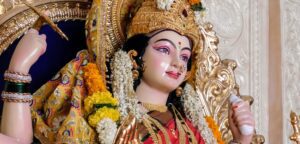



108 Names of Maa Durga